

10 Do's and Don'ts of Wall and Window Wrap Design
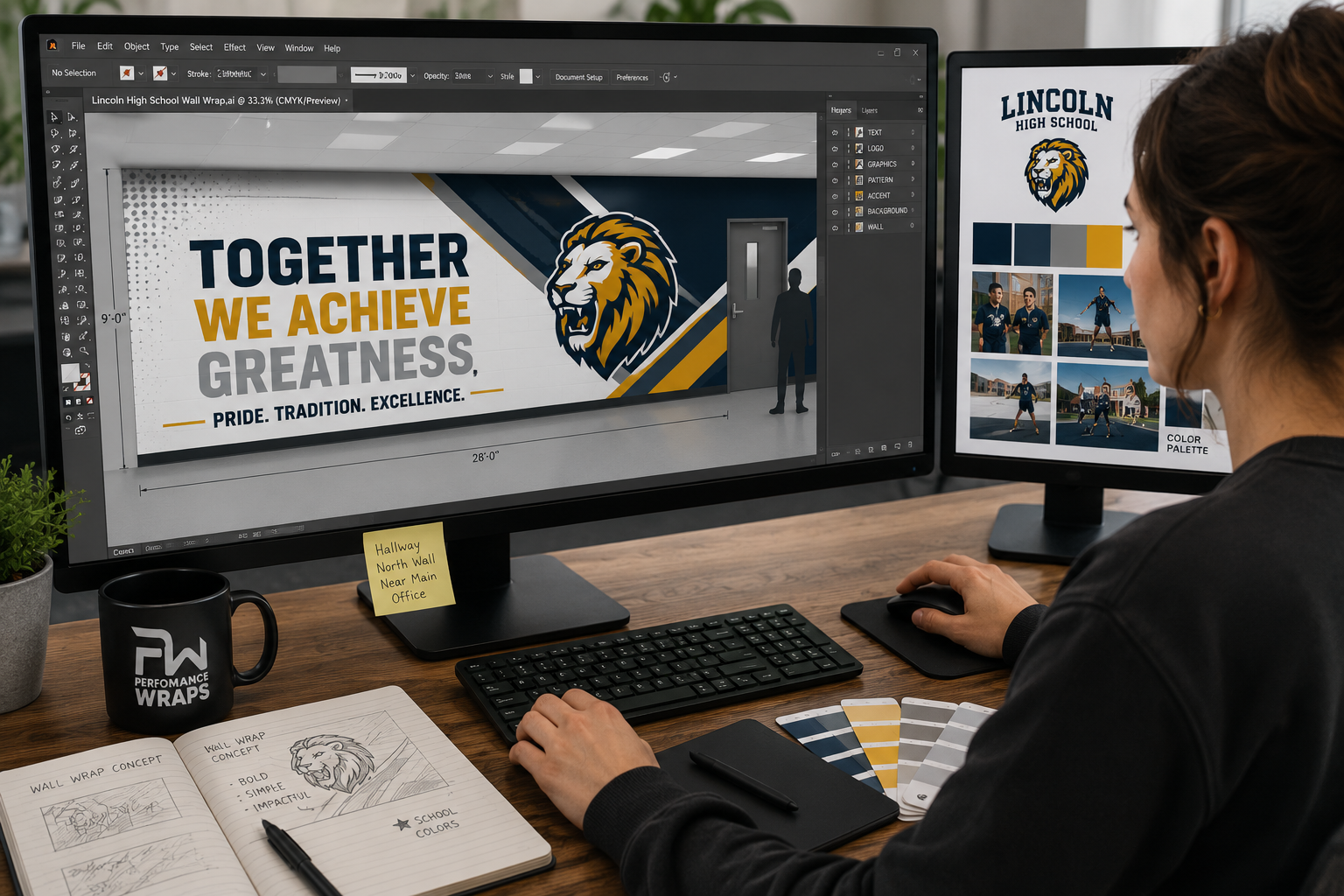
Wall wraps and window graphics have become one of the most effective ways to transform ordinary spaces into memorable environments. Whether you're designing school wall wraps, office branding, retail window graphics, or large-scale wall murals, great design can elevate a space, reinforce your message, and leave a lasting impression.
Unfortunately, not every wall or window wrap hits the mark.
After years of designing and installing custom wall wraps and window graphics, we've seen firsthand what works—and what doesn't. Before investing in your next project, consider these important dos and don'ts of wall and window wrap design.
DO: Start with a Clear Goal
The best wall and window wraps begin with a purpose.
Ask yourself:
Are you trying to inspire?
Educate?
Improve branding?
Increase privacy?
Create wayfinding?
Celebrate achievements?
A wrap designed to motivate students should look very different from a wrap designed to help visitors navigate a building.
Without a clear goal, even a beautiful design can feel disconnected from the space.
DON'T: Try to Say Everything
One of the most common mistakes is trying to cram too much information into a single graphic.
Large walls often tempt people to fill every inch with text, logos, photos, and messaging.
The result?
Visual clutter.
Most people will only spend a few seconds looking at a wall graphic. Focus on one primary message and let the design breathe.
Remember: simple is memorable.
DO: Design for the Viewing Distance
A design that looks great on a computer screen may not work when printed at 20 feet wide.
Consider:
How far away viewers will be
Walking traffic patterns
Viewing angles
Lighting conditions
Large headlines and bold imagery are often more effective than small details that can only be appreciated from a few feet away.
DON'T: Use Low-Resolution Images
Nothing ruins a wall mural faster than blurry artwork.
Large-format graphics require high-resolution photography and properly created vector artwork.
Before finalizing a design:
Verify image quality
Avoid screenshots
Use professional photography whenever possible
Ensure logos are vector files
What looks sharp on a laptop may appear pixelated when enlarged to wall size.
DO: Consider the Architecture
Great environmental graphics work with the building—not against it.
Pay attention to:
Doors (how it looks open vs closed)
Windows
Fire alarms
Light switches/Outlets
Fire extinguishers
Baseboard Trim
Furniture Placement
Existing architectural features
The strongest wall wrap designs incorporate these elements naturally into the layout and ensure text does not get cut off in these areas.
DON'T: Ignore Window Functionality
Window wraps are unique because glass serves a purpose beyond aesthetics.
Before designing a window graphic, ask:
Does the space need privacy?
Is visibility important?
How much natural light should remain?
Will the graphic be viewed from inside or outside?
For example, perforated window film may be ideal for exterior branding while still allowing occupants to see outside.
Designing a window like a wall can create problems for the people who use the space every day.
DO: Maintain Brand Consistency
Whether you're branding a school, business, healthcare facility, or nonprofit organization, consistency matters.
Use:
Approved brand colors
Consistent typography
Existing logos
Established messaging
When wall graphics, window wraps, signage, and marketing materials all share a cohesive look, the entire environment feels more professional.
DON'T: Overuse Text
People rarely stop and read paragraphs on walls.
The most effective wall graphics use:
Short headlines
Simple messaging
Strong visuals
Easy-to-read typography
If a message requires more than a few seconds to understand, it's probably too complicated.
DON'T: Forget About Longevity
Design trends come and go.
Before committing to a wall or window wrap, ask:
"Will this still feel relevant in five years?"
Avoid designs that rely heavily on short-term trends unless the graphic is intended to be temporary.
Timeless designs often provide the greatest long-term value.
DO: Prioritize Readability
A beautiful design that can't be read isn't effective.
Make sure:
Text contrasts with the background
Fonts are large enough
Important information is easily visible
Graphics don't compete with messaging
If viewers have to work to understand the graphic, you've already lost them.
DON'T: Design Without Installation in Mind
Not every design translates perfectly to real-world installation.
Large graphics may need to account for:
Wall texture
Seams
Window mullions
Building irregularities
Surface limitations
Involving your installers during the design phase can help prevent costly revisions and unexpected challenges.
The Wrap Up
The most successful wall wraps and window graphics strike a balance between creativity and functionality. They capture attention without overwhelming the viewer, communicate a clear message, and enhance the space they occupy.
Whether you're creating school wall wraps, office branding, retail window graphics, or custom wall murals, thoughtful design is what transforms a graphic from something people notice into something they remember.
Before designing your next project, take the time to evaluate both the design and the environment. A little planning up front can make the difference between a good wrap and a truly exceptional one.
Work with us: https://www.performancewraps.com/business-wraps-1
